
In-person exercise with a facilitator
Good for a day of in-depth discussion, with the leadership team together and someone guiding the conversation.
Crisarium vs. tabletop exercise
The method boards and regulators recognize — a scenario in rounds, time pressure, the Board / Shareholders' questions at the end. What changes: no one decides by the loudest voice in the room, no one needs to be in the same room, and the results are measured.
What stays
From the first alert to accountability before the Board / Shareholders, with facts that change along the way.
Up to 10 functions, from the CEO to Customer Service, each with the decisions it owns.
A deadline for each decision and a challenge from another function before confirming.
Deadlines and obligations for Brazil, the European Union and the United States, cited from the regulation, plus an international reference based on technical standards for other countries.
What changes
| Traditional tabletop exercise | Crisarium | |
|---|---|---|
| Who decides | The group, in one room; the most senior voice tends to carry | Each executive, alone, in their own role |
| Pressure | Simulated by the facilitator | A deadline per decision, challenges from other functions and the Board / Shareholders' questions |
| Calendar | Everyone in the same room on the same date, for hours or a full day | 24- or 48-hour rounds; each person decides when they can, on phone or computer |
| Who's missing | Left out of the exercise | AI decides for the role, and the absence goes into the report |
| Results | A descriptive facilitator's report | Divergences between functions, response times, adherence to your crisis plan and financial impact round by round |
| Frequency | Usually once a year | Up to four different scenarios a year |
| Cost | Typically tens of thousands of dollars per session | The annual plan costs less than one session |
Why deciding alone
In a room, the leadership team discusses and reaches a shared answer. That helps alignment, but it hides what each function would do on its own — which is how a real crisis starts: at 6:40 on a weekday morning, with half the committee out of the room and everyone deciding on what they know.
In Crisarium, each executive decides in their own role, against the clock, without seeing anyone else's answer until the round closes. Then everyone sees what each function decided, and the report points out where the decisions contradict each other. That's where real crises usually get worse.
Refused any contact with the criminals.
Set aside funds for the ransom payment.
Sample report
Excerpts from the group report of a demo session with a fictional company. The full report also includes each round's timeline, the decisions made on information that later changed, and adherence rule by rule.
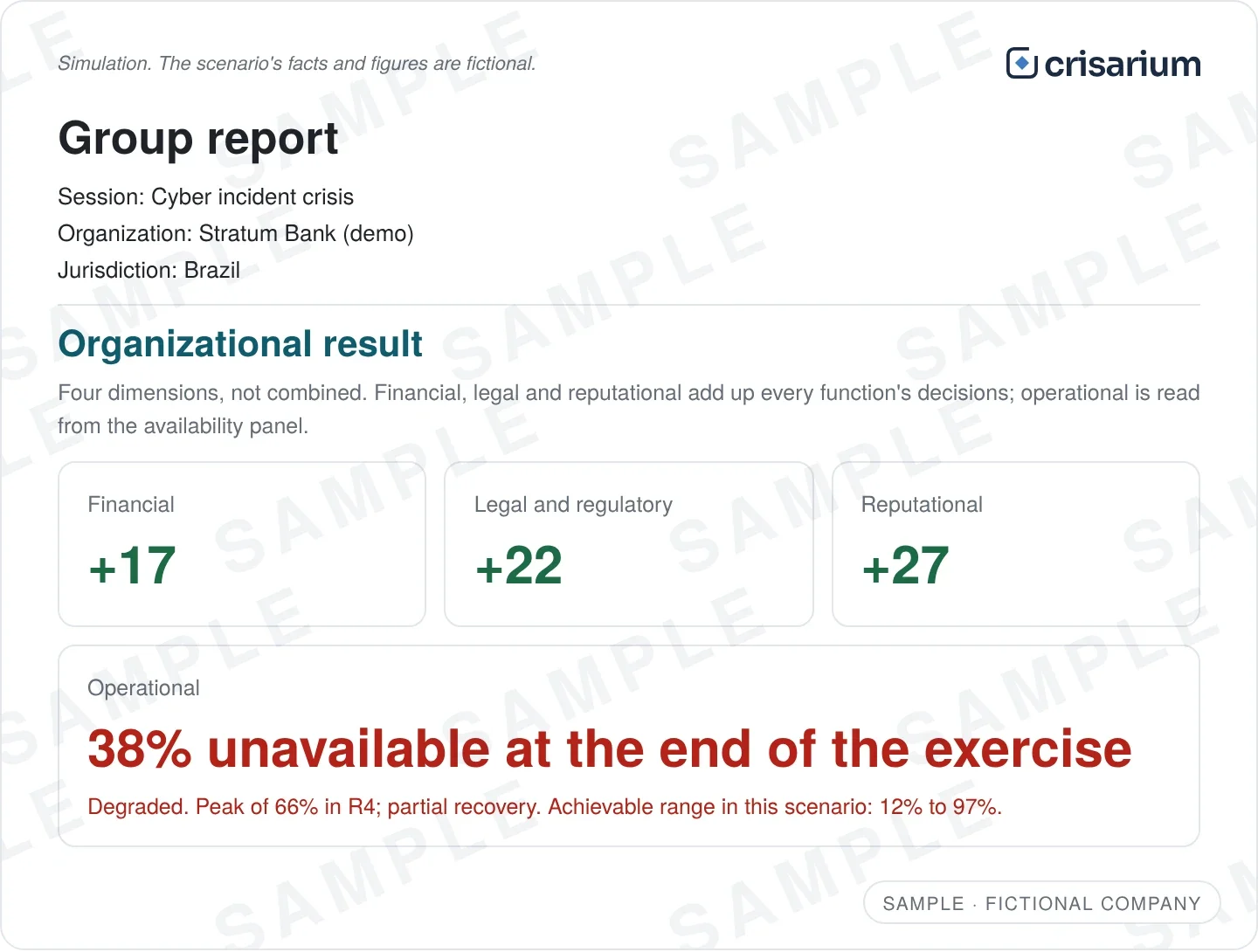
Financial, legal, reputational and operational, with no single score hiding where the company lost.
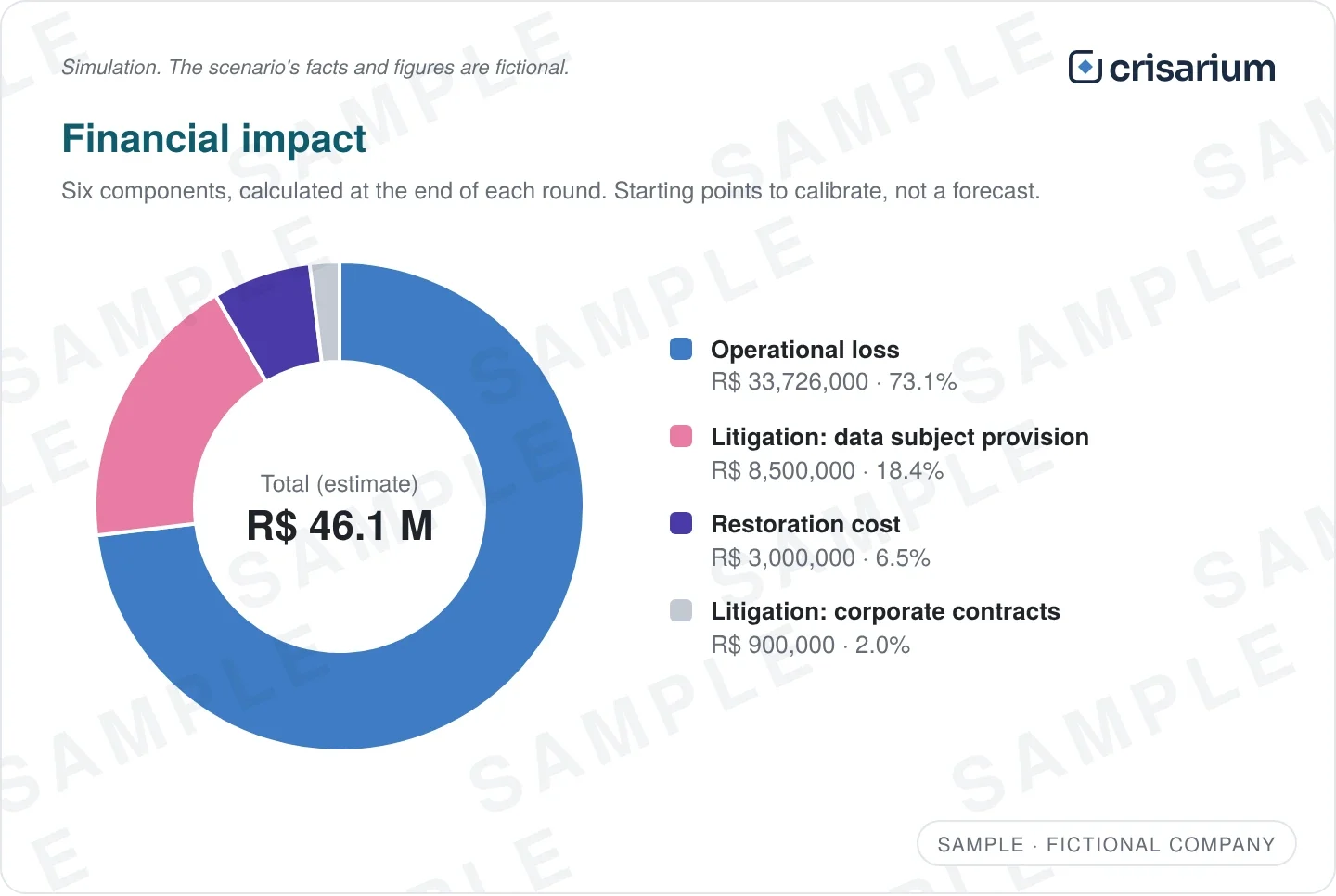
Estimated financial impact by component: in this example, 73% comes from operational downtime.
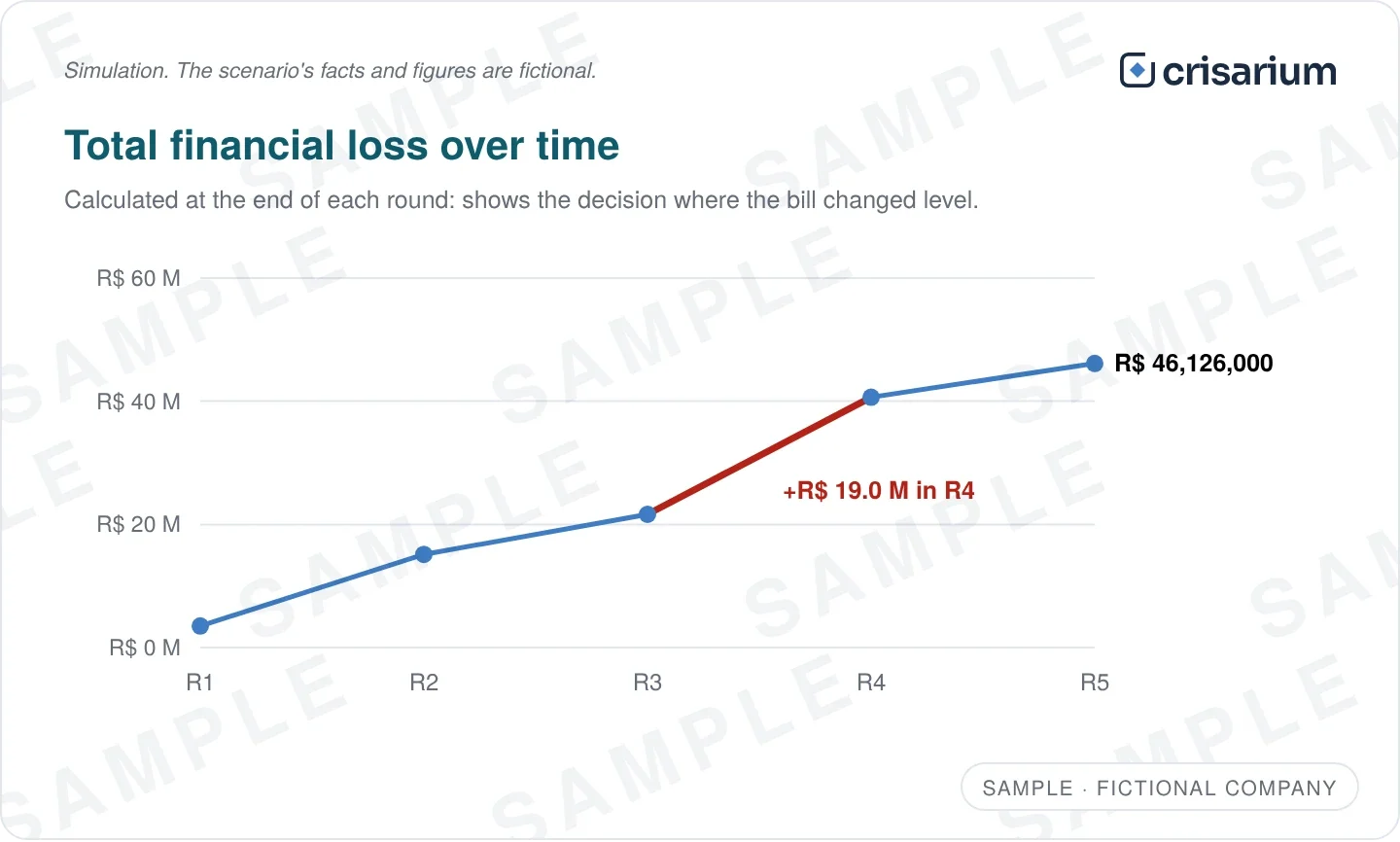
Losses calculated round by round show the jump: R$ 19 million more in round 4.
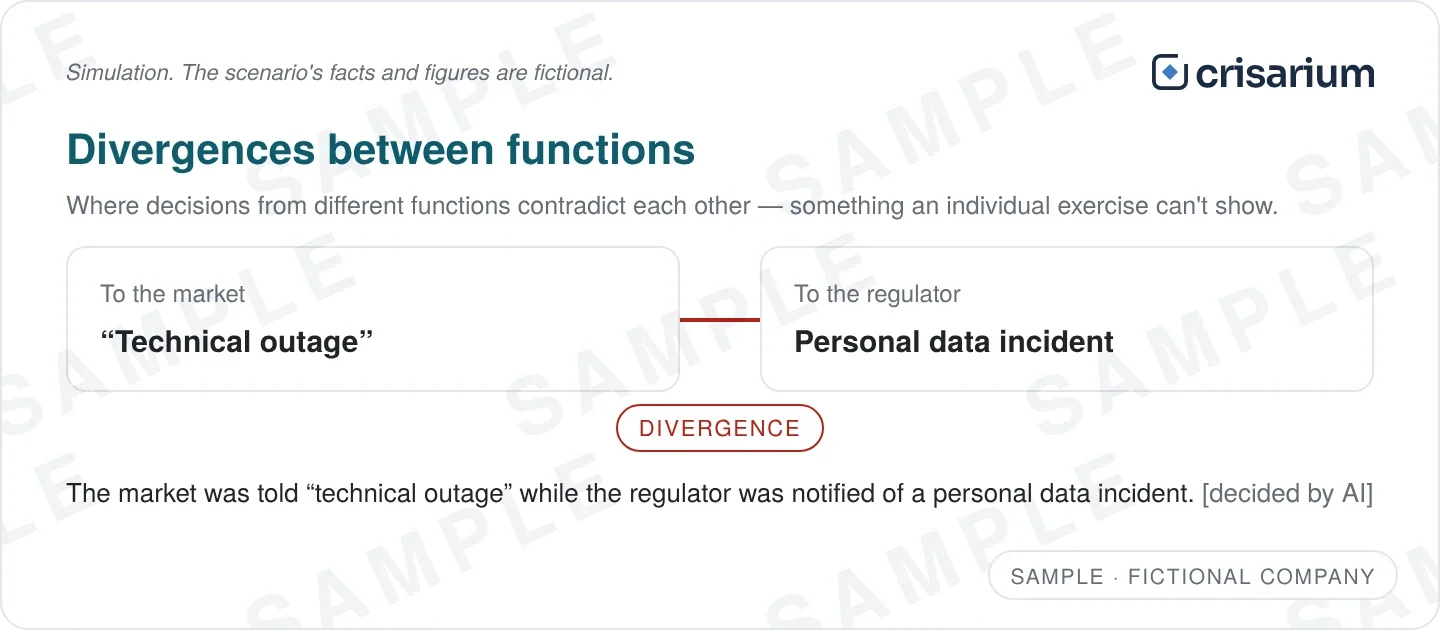
The market heard one thing; the regulator, another.
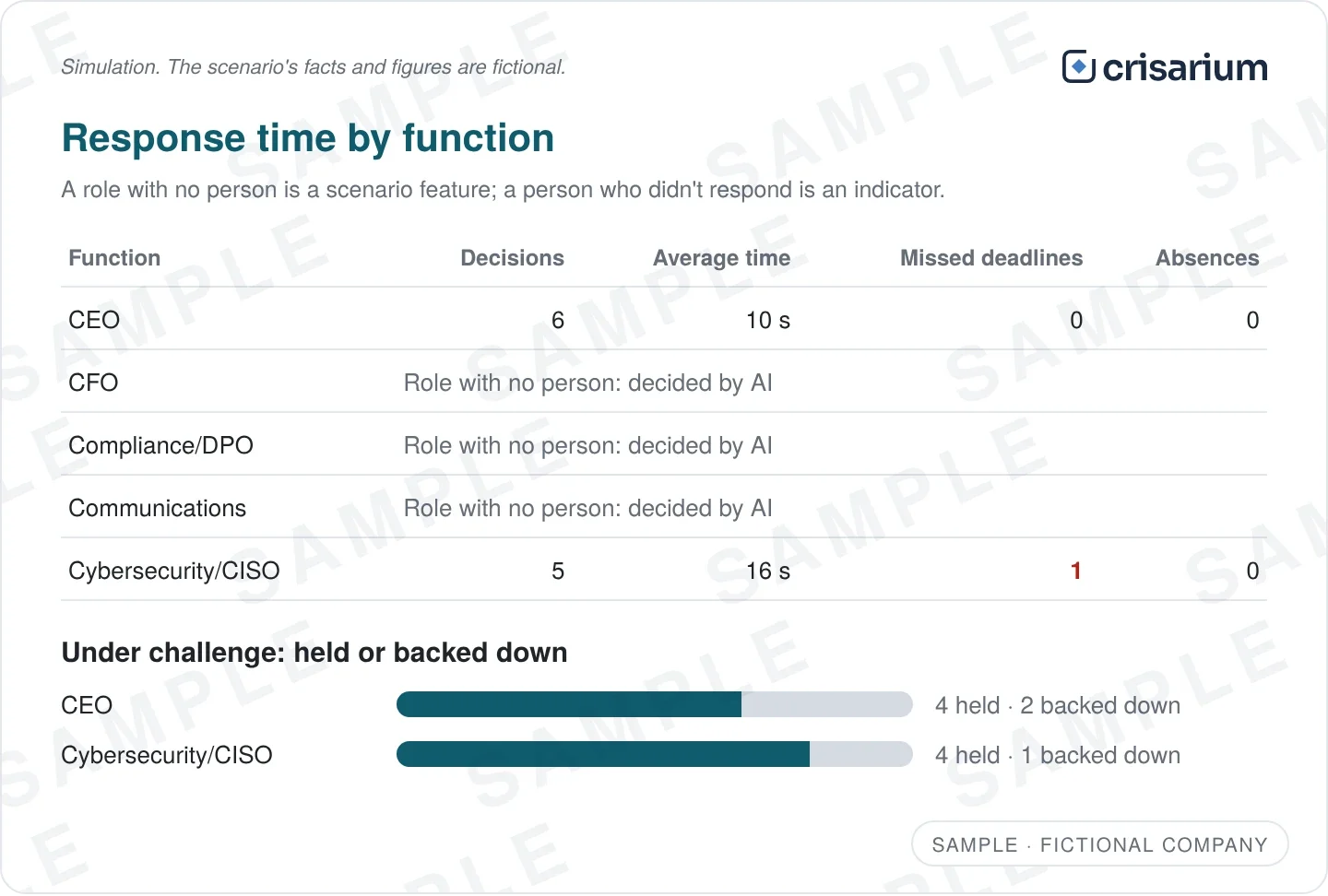
Response time by function, missed deadlines, absences, and who held their decision when another function challenged it.
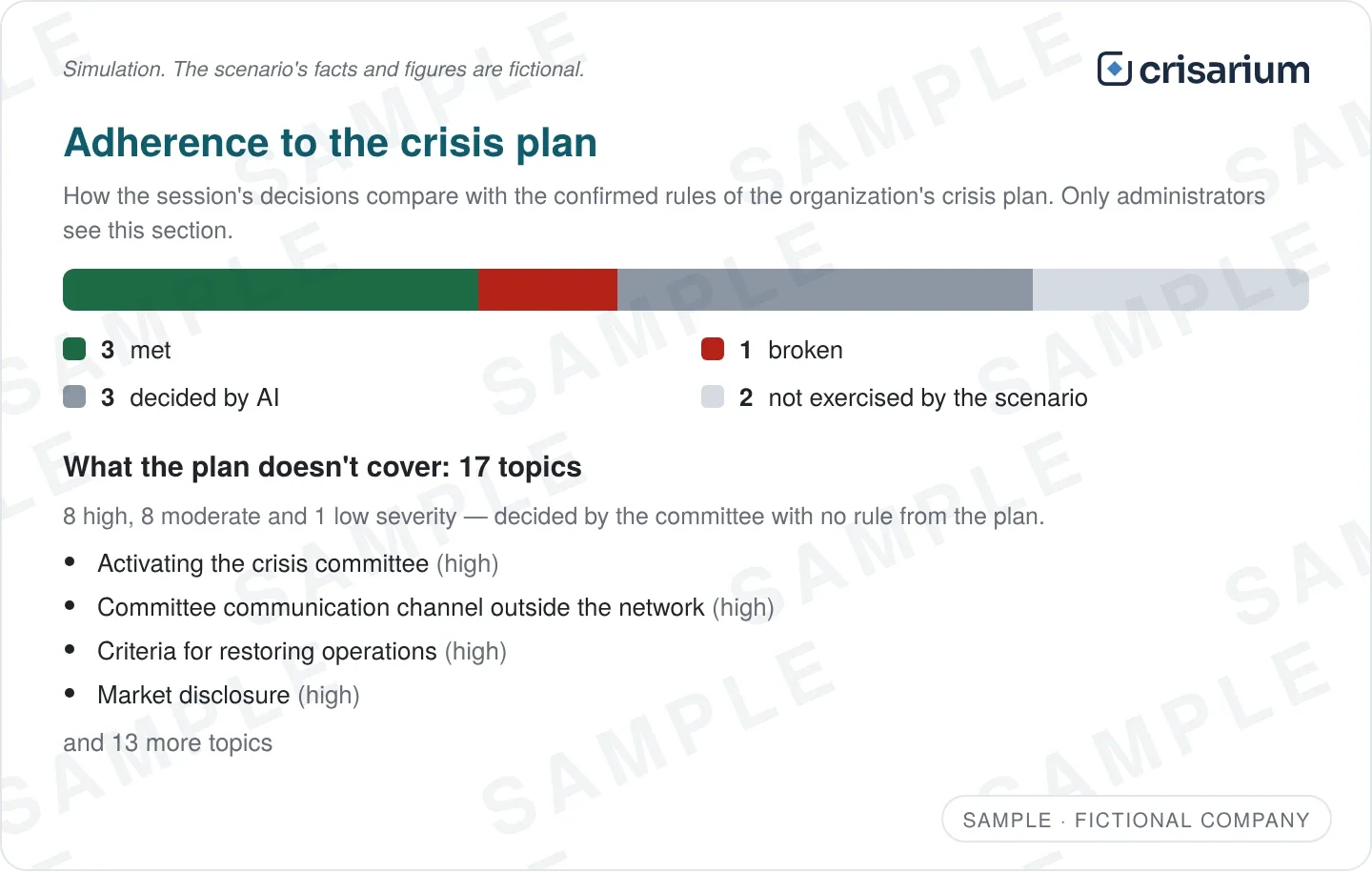
Rules from your plan met and broken, and the topics the plan doesn't cover.
Questions and acknowledgements based on what each function decided.
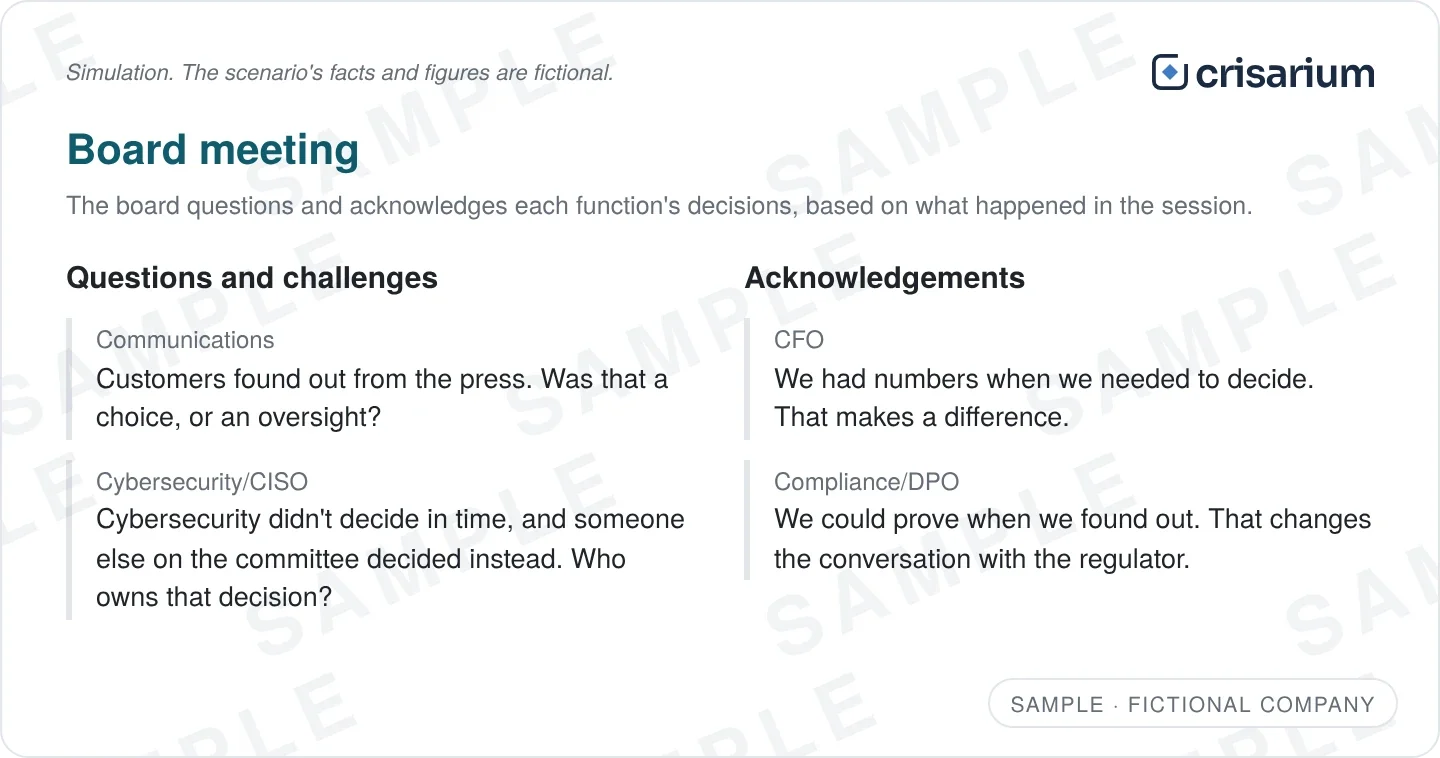
Illustrative example. The scenario's facts and figures are fictional.
When to use each
Good for a day of in-depth discussion, with the leadership team together and someone guiding the conversation.
Good for practicing often, measuring each function and arriving at that discussion knowing where the gaps are.
Many companies will use both: Crisarium throughout the year, and an in-person session when the report shows where to dig deeper.
A facilitated tabletop exercise typically costs tens of thousands of dollars and takes a full day of your leadership's calendar. The annual plan costs less than a single session like that.
See plans and pricingFAQ